
Festival
Golden Eagle Festival 2026: The Complete Guide
Golden Eagle Festival 2026: The Complete Guide
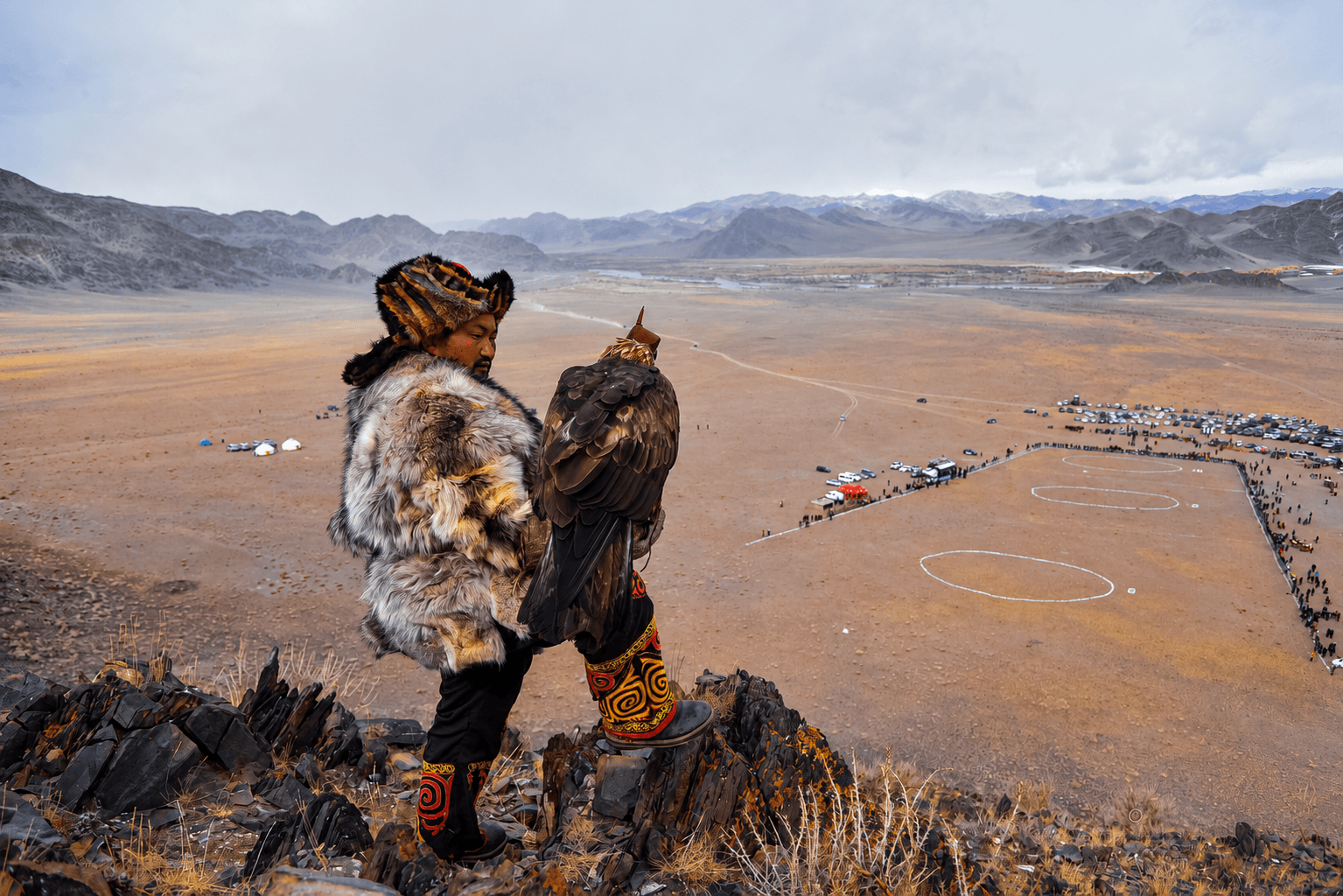
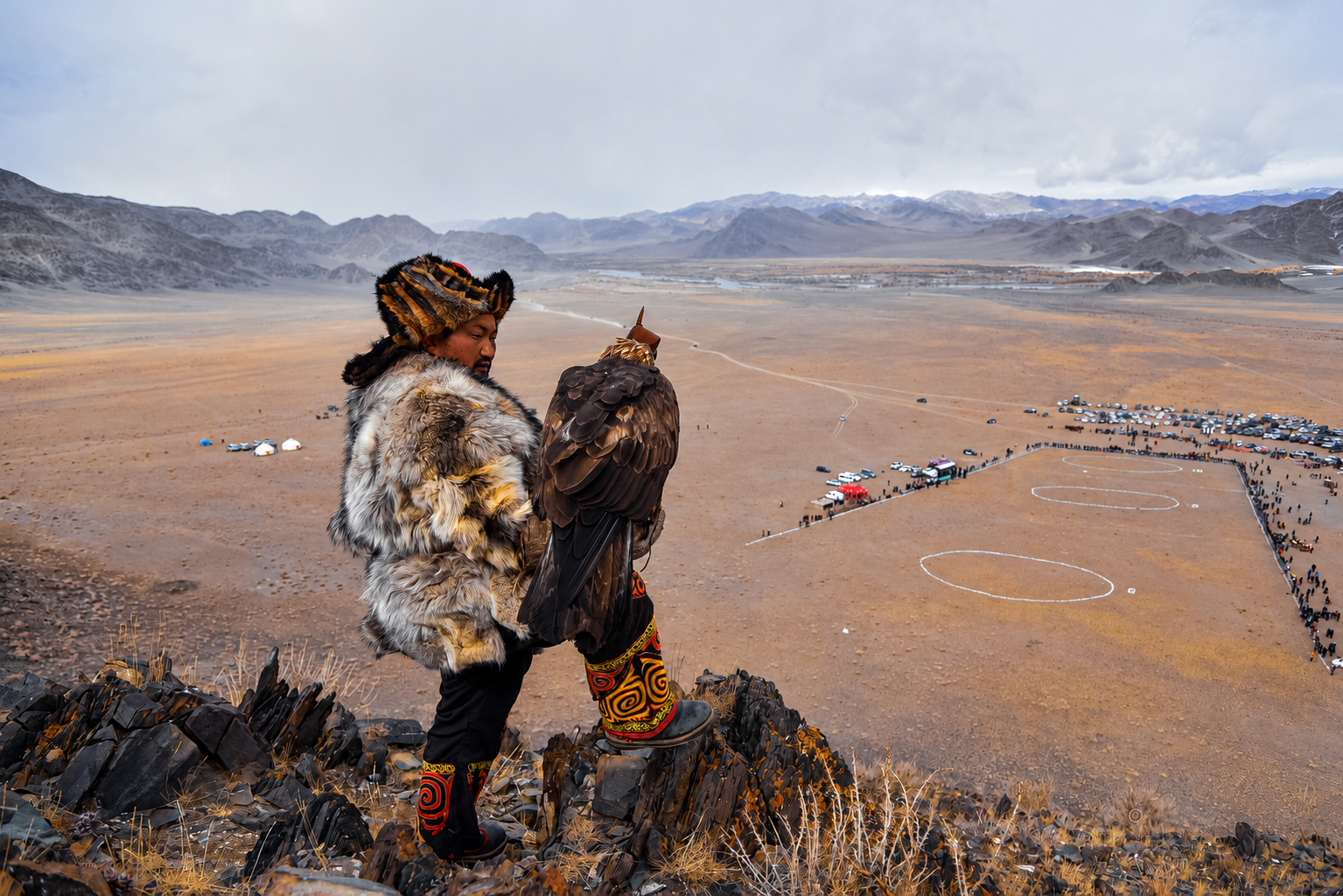
The Golden Eagle Festival is one of the most extraordinary cultural events on earth. Each October, eagle hunters from across the Altai mountains ride to Shar Nuur on horseback, their golden eagles perched on their arms, dressed in the elaborate fur and embroidered garments their families have worn for generations. If you are planning to visit Western Mongolia, this is the event you should build your whole trip around.
This guide covers everything: exact 2026 dates, how to buy tickets, what happens on each day, where to stand for photographs, what to pack for October weather, where to sleep, and how to make the most of the full week around the festival.
2026 Festival Dates
There are two festivals in the Bayan-Ölgii region each autumn:
- Shar Nuur Eagle Festival (main event): 3–4 October 2026
- Ölgii Eagle Festival (smaller, more local): Late September 2026 — typically the last weekend of September
The Shar Nuur festival, held at Shar Nuur (Shar Lake) about 15 km from Ölgii town, is the main event that most international visitors attend. It is larger, more competitive, and draws eagle hunters from the most remote corners of the province. The late-September Ölgii festival is smaller and less touristy — if you can attend both, you should.
Important: Book flights and accommodation at least 3–4 months in advance. October is high season for this festival and rooms in Ölgii sell out fast.
Tickets and Entry
Entry to the festival grounds costs approximately 30,000–50,000 MNT (around $9–15 USD) for foreign visitors. Tickets are sold at the gate on both days — there is no advance booking for general entry. A VIP area with reserved seating and better sightlines costs around 80,000–100,000 MNT (~$24–30 USD) and is worth the extra amount if you are primarily there for photography.
If you book through a tour operator, your guide will handle tickets and position you in the best viewing areas. Going independently is possible but you may miss the context of what you are watching without a guide to explain the scoring and announce results.
What Happens at the Festival
The Competition Format
The Golden Eagle Festival is a formal competition judged by a panel of senior eagle hunters. Hunters are scored on the speed of their eagle's descent, accuracy in hitting the target, and the beauty of their traditional costume. Points from all events are combined to crown an overall winner — usually a hunter who has been training the same eagle for several years.
Day One: Opening and Eagle Speed Competitions
The festival opens with a procession of eagle hunters riding in on horseback — this is one of the most cinematic moments of the entire event. Dozens of hunters enter the field together, eagles on their arms, crowd roaring. Find a high vantage point for this; it takes only a few minutes but the images are extraordinary.
The main competition on Day One is the eagle calling contest. A hunter rides to the top of a steep hillside above the arena, holds their eagle up, then releases it. Another family member — usually a son or younger relative — stands in the valley below waving a fox-fur lure. The eagle must spot its handler from the summit and fly down to land on their arm. Speed, directness, and obedience are all scored.
Watching eagles descend from a ridge at full speed — sometimes covering 300 meters in under ten seconds — is genuinely breathtaking. The crowd falls quiet as the eagle drops, then erupts when it lands cleanly on the glove.
Day One also includes a costume judging competition, where hunters are scored on their traditional dress. Kazakh festival dress is elaborate — thick fox and wolf fur hats, heavily embroidered robes, ornate leather saddles, and decorative silver accessories. Many of these costumes are family heirlooms, made by grandmothers or great-grandmothers and worn only for festivals. This is the best time to ask hunters if you can take a portrait. Most are happy to oblige, especially if you ask through a guide.
Day Two: Accuracy Tests and Horseback Games
Day Two begins with the accuracy test, where a dragged fox-fur target is pulled across the ground on a rope behind a galloping horse. Hunters release their eagles from a fixed point and scoring is based on whether the eagle strikes the target and how quickly.
The afternoon brings the horseback games, the most physically spectacular part of the festival:
- Kiz Kuar (girl chasing): A young man chases a young woman on horseback. If she outruns him, she is allowed to whip him on the way back. This is a traditional courtship game, now performed as sport.
- Tiyn Teru (coin picking): Riders gallop at speed and try to pick up coins from the ground without dismounting — a test of horsemanship and balance.
- Kokpar (tug-of-war on horseback): Two teams on horseback fight over a goat carcass and try to carry it to a goal. This is chaotic, physical, and extremely fun to watch.
Day Two ends with the awards ceremony, where the champion eagle hunter and their eagle are announced. This is a deeply emotional moment for many hunters — winning is a point of immense family pride. If you can stay until the end, do so.
Photography Guide
Best Positions
For the eagle calling competition, position yourself halfway up the hillside opposite the launch point. From here you can photograph the hunters on the summit with a wide lens, then switch to a longer lens (200mm+) when the eagle launches. Shooting up the hill from the valley floor gives dramatic backgrounds but means the eagle is small in the frame until the final seconds of the descent.
For the costume parade and awards, get close. A 50mm or 85mm lens works well here. The light on Day One morning is usually excellent — the sun comes over the eastern ridge around 9 am and illuminates the hunters from the front for about two hours. By midday the light is harsh and flat; this is a good time to take a break, eat, and talk to hunters at the sidelines.
Lenses to Bring
- 70–200mm f/2.8: Essential for eagle action shots
- 24–70mm: Crowd scenes, costumes, wide establishing shots
- 50mm or 85mm: Portraits of hunters
- Teleconverter (1.4x or 2x): Useful if you want to reach eagles in flight at distance
Settings and Timing
Eagles in steep descent move extremely fast. Set your shutter speed to at least 1/1600s, ideally 1/2500s, to freeze wing movement. Use continuous autofocus (AI Servo on Canon, AF-C on Nikon/Sony) and burst mode. Of every twenty frames, perhaps two or three will be keepers — that is normal.
The golden hour at Shar Nuur is genuinely golden. Arrive before 8 am to photograph hunters warming up with their eagles before the official programme begins. These quiet morning moments — a hunter adjusting a hood on their eagle, a horse standing still against the mountains — are often more powerful than the action shots.
Weather and What to Wear
October in Bayan-Ölgii is genuinely cold. Temperatures during the festival typically range from 5°C to 12°C during the day and drop to -5°C to -10°C at night. The Shar Nuur site is exposed and wind can make it feel colder. Rain is possible but less common than in summer; light snow is occasionally seen on the surrounding peaks.
Pack as though you are going to stand outside in near-freezing wind for six hours — because you are. Layers are essential:
- Thermal base layer (top and bottom)
- Insulating mid layer — fleece or down
- Windproof outer jacket
- Warm hat, gloves, and a scarf
- Sturdy, waterproof boots — the ground can be frozen or muddy
- Hand warmers for the camera hand
Sunscreen is not optional — the Altai sun at altitude is strong even in October, especially at the midday break.
Getting to Shar Nuur
Shar Nuur is approximately 15 km from Ölgii town — a short 20-minute drive. If you are on a tour, your guide will arrange transport. Independent travelers can hire a driver in Ölgii the evening before; agree on a price in advance (typically 40,000–60,000 MNT for the round trip, per vehicle).
Shared minivans also run from Ölgii town centre on festival mornings — ask your guesthouse for the current departure point. These fill up fast and leave early; aim to be at the van by 7:30 am.
Where to Stay
Most accommodation for the festival is in Ölgii town, which has a range of guesthouses and simple hotels. The best-known options book out months in advance for festival weekend. Book in October as early as January or February.
- Guesthouses in Ölgii town: Most popular option — basic rooms with shared bathrooms, breakfast sometimes included. Budget around $15–30 per person per night.
- Ger camps near Shar Nuur: A handful of operators run ger camps specifically during the festival. Sleeping in a ger near the festival grounds is atmospheric and means you do not have to commute each morning. Prices are higher during festival week — expect $40–70 per person including meals.
- Homestay with a local family: Altai Mount Travel can arrange homestays in Ölgii or in nomadic family gers outside town. This is the most authentic experience and often the most affordable.
Beyond the Festival: What to Do in the Area
Most visitors who come for the Golden Eagle Festival extend their trip into a wider tour of Western Mongolia. The region is extraordinary in autumn — the Altai mountains are post-summer green but not yet fully snow-covered, and the low-angled October light makes everything glow. Popular add-ons include:
- Day with an eagle hunter family: Visit a hunter at their home, learn how an eagle is trained from chick to adult, try holding the eagle yourself. This one-on-one time is far more personal than the festival crowds allow.
- Altai Tavan Bogd National Park: The five sacred peaks, Potanin Glacier, and Khoton Lake are an easy day's drive from Ölgii. In October the crowds are gone and the light is superb.
- Nomadic family stay: Spend one or two nights with a Kazakh nomadic family — completely different from the festival experience and equally memorable.
- Ölgii town exploration: The town itself is worth a half-day — the central market, mosque, and craft shops selling handmade Kazakh felt work and embroidered textiles.
Cultural Etiquette at the Festival
The Golden Eagle Festival is a living cultural ceremony, not a performance put on for tourists. Treat it as such.
- Ask before photographing individuals — a nod and pointing at your camera is universally understood
- Do not approach or touch the eagles without invitation from the hunter
- If a hunter invites you for tea or food, accept — refusing is considered impolite
- Stay behind the ropes during competitions; judges and organizers take safety seriously
- Bring small gifts for eagle hunter families if you are visiting privately — chocolates, nuts, or a simple scarf are appreciated
How to Book a Festival Tour
Altai Mount Travel runs a dedicated Golden Eagle Festival tour that combines festival attendance with a nomadic family stay, an eagle hunter day visit, and optional extension to Altai Tavan Bogd. The tour runs from 30 September to 7 October 2026 and includes airport transfers, all accommodation, a fluent English-speaking guide, all transport, and most meals.
Spots are limited to groups of 8 or fewer to ensure a quality experience. October 2026 bookings are already filling. If you are considering this trip, reach out now.
Email: altaimounttravel@gmail.com | WhatsApp: +976 8542 8887